

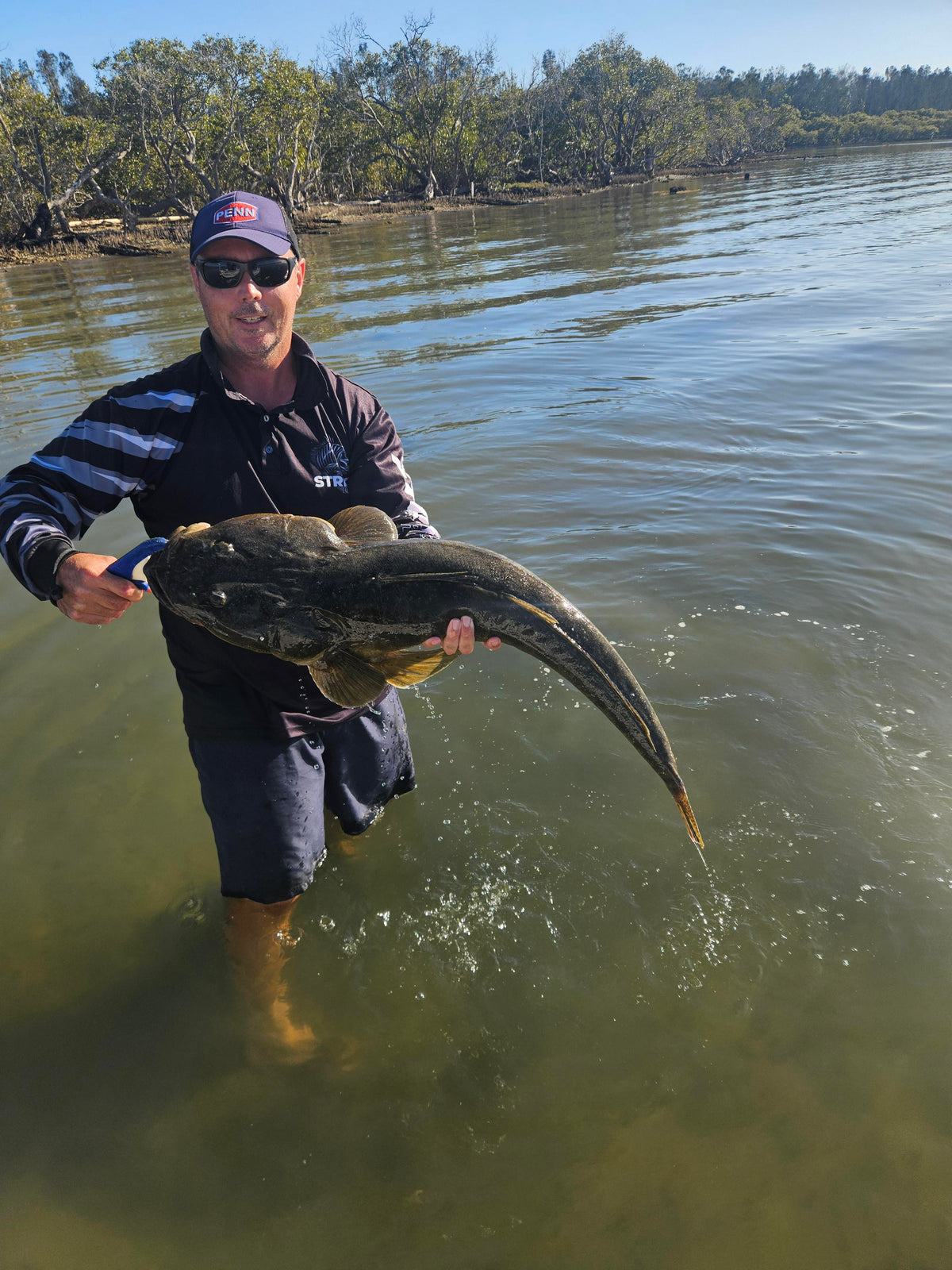
There's something about a metre flathead that gets under your skin.
If you've ever seen one slide out of the sand behind your lure or watched a fish that looked more like a crocodile than a flathead engulf your plastic boatside, you'll know exactly what I mean. They're a fish that most anglers dream about, but very few ever crack the magic one metre mark.
The good news is that if you're on the east coast of NSW, spring marks the beginning of your best opportunity to find one.
After a long winter, water temperatures begin to climb, baitfish become more active and those giant breeding females start feeding with purpose. They're looking to put condition back on after the colder months, and if you know where to look and how to present your lure, this is when your chances increase dramatically.
Think Big Fish, Not Big Numbers
The first mistake many anglers make is chasing trophy flathead the same way they chase school fish.
If your goal is to catch dozens of 45-60cm fish, that's perfectly fine. But if you're chasing a metre fish, you need to change your mindset.
A metre flathead didn't get that big by wasting energy chasing every tiny baitfish that swims past.
These fish are predators that sit and wait. They want an easy meal that's worth the effort. Large mullet, legal bream, whiting, squid and decent-sized prawns are all on the menu.
That means bigger soft plastics, larger hardbodies and swimbaits shouldn't scare you. In fact, they often help weed out the smaller fish and attract the true giants.
Location Is Everything
One thing metre flathead have in common is that they don't live just anywhere.
You'll certainly catch quality fish on shallow flats, but the really big girls are usually positioned where they have easy access to deeper water.
Some of my favourite areas include:
- Drop-offs leading onto shallow sand flats.
- The edges of channels.
- Creek mouths.
- Deep bends in rivers.
- Bridges with current flow.
- Sand patches beside weed beds.
- The edges of oyster leases.
These fish love sitting right on the transition where sand meets weed or where shallow water suddenly drops away.
You can drift over these areas all day without knowing they're there because they'll often bury themselves completely under the sand until a meal swims past.
That's why accurate lure placement is so important.
Fish the Tide, Not the Clock
If I could only choose one thing to get right, it would be the tide.
Moving water brings food.
An incoming tide pushes prawns and baitfish onto the flats, while the falling tide washes them back into the channels.
Both can fish exceptionally well, but I particularly like the first half of the run-out tide around drop-offs. Big flathead know food is about to be funnelled straight past them, so they simply sit and wait.
Current also helps carry scent naturally through the water, allowing predators to locate your lure much more easily.
Slow Down
One of the biggest lessons I've learned over the years is that trophy flathead rarely reward anglers who rush.
Large fish are incredibly efficient hunters.
They'll happily watch a lure pass several times before finally deciding to eat it.
Long pauses, slow hops and keeping your lure close to the bottom will generally out-fish aggressive retrieves.
If your lure isn't regularly touching the sand, you're probably fishing too high.
Flathead spend most of their lives looking upwards, waiting for something vulnerable to pass overhead.
Why Scent Makes Such a Difference
Flathead don't rely on vision alone.
Their entire body is built around detecting prey through vibration, movement and scent.
When your lure lands near a fish, they'll often follow it before deciding whether it's worth eating.
That's where adding a quality scent can turn follows into bites.
I don't see scent as something that magically attracts fish from hundreds of metres away. Instead, I see it as giving the fish one more reason to commit once it's already interested.
That's exactly why we developed STRIKERZ Pro Scent.
Rather than simply masking plastic odours, Pro Scent leaves a natural scent trail behind your lure as it moves through the water. When a big flathead follows your plastic, that extra scent can be enough to convince it to open its mouth instead of turning away at the last second.
It's a simple addition that takes only seconds to apply but can make a real difference, particularly when fish are following but not committing.
Spring Is About Building Momentum
Don't expect every trip in September to produce a metre fish.
The water is warming, bait is increasing and fish are becoming more active, but conditions continue improving right through October and November.
Each week the system becomes more alive.
More prawns appear.
More baitfish move into the estuary.
More fish begin feeding aggressively.
That's why spring isn't just another season—it's the start of the trophy flathead calendar.
The anglers who consistently land metre fish are usually the ones already spending time on the water before everyone else catches on.
Handle These Fish With Respect
A metre flathead is almost always a large breeding female.
These fish produce millions of eggs every season and are incredibly important to the future of the fishery.
Take a quick photo, support the fish properly with both hands, avoid hanging them vertically by the jaw and return them to the water as quickly as possible.
Watching a fish of that calibre swim away is every bit as satisfying as catching it.
The One That Keeps You Coming Back
Every serious flathead angler has a story.
The fish that followed but didn't eat.
The one that spat the lure beside the boat.
The monster that straightened a hook or buried itself in the net before somehow escaping.
Those moments are what keep us coming back.
The next cast could be the one., the next drift could produce the fish you've been chasing for years.
As spring arrives on the NSW east coast, the odds finally start swinging back in your favour. Spend time on quality water, fish slowly, focus on structure, use the tides to your advantage and don't overlook the value of a quality lure scent like STRIKERZ Pro Scent.
Because somewhere out there, buried beneath a patch of sand, is a flathead over a metre long that's waiting for one mistake from an unsuspecting baitfish—or one perfectly presented lure.
And when it happens, you'll understand why so many anglers become obsessed with chasing these incredible fish.


