

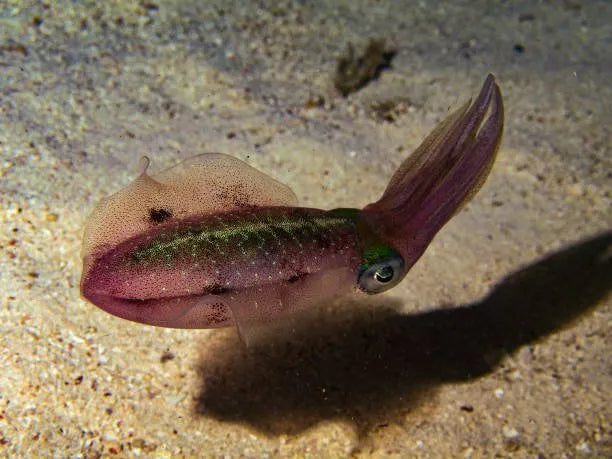
From choosing the right jig to understanding how squid respond to UV, natural proteins and amino acids, there's more to successful squid fishing than meets the eye.
Squid are one of those species that can be frustrating one minute and incredibly easy to catch the next. You can throw every jig in your tackle box without getting a touch, then suddenly find yourself catching them cast after cast.
While squid fishing might seem straightforward, understanding how they hunt, where they feed and what triggers an attack can make a huge difference to your results.
Where to Find Squid
Squid are ambush predators that spend much of their time hunting around weed beds, rocky reefs, sand patches and areas holding baitfish.
Southern calamari are commonly found around shallow seagrass and kelp beds, while arrow squid are often encountered in deeper water around reefs, channels and offshore areas.
Some of the best places to target squid include:
- Weed beds with sandy openings.
- Rocky shorelines and reef edges.
- Jetties and wharves, particularly around lights at night.
- Drop-offs and channels adjoining shallow feeding grounds.
- Areas holding prawns, shrimp and small baitfish.
Squid will often patrol the edges of weed beds, waiting to ambush prey moving through open water.
Don't overlook shallow water either. Large calamari can sometimes be caught in less than a metre of water.
When Is the Best Time?
Squid can be caught day or night, but dawn, dusk and periods of reduced light are often particularly productive.
Clear water generally makes it easier for squid to locate prey visually, although they can still be caught in slightly discoloured conditions.
Tidal movement can also influence feeding activity. A gentle current around weed beds or reef edges can concentrate bait and create ideal hunting opportunities.
At night, illuminated jetties and wharves are worth investigating. Lights attract small marine life and baitfish, which can bring squid into the area.
Choosing the Right Squid Jig
Squid jigs come in an enormous range of colours, sizes, weights and finishes.
For most Australian squid fishing, sizes 2.5 to 3.5 are a good starting point.
Smaller jigs can be effective in shallow water or when squid are reluctant to strike, while larger or heavier jigs are useful for deeper water and stronger currents.
Colour selection is another important consideration.
Natural prawn and baitfish patterns are worth trying in clear water, while pink, orange and other bright colours can provide additional contrast. Dark colours can also create a strong silhouette, particularly in certain low-light conditions.
Rather than constantly changing colours, pay attention to how squid respond to your jig. Sometimes changing the retrieve makes more difference than changing the colour.

Getting Your Retrieve Right
One of the biggest mistakes anglers make is working their squid jig too quickly.
Squid are capable of incredibly fast attacks, but they will often grab a jig as it falls through the water.
A simple and effective retrieve involves:
- Cast beyond the area you want to fish.
- Allow the jig to sink towards the desired depth.
- Give the rod two sharp upward lifts.
- Allow the jig to fall on a controlled, semi-slack line.
- Pause briefly and repeat.
Watch your line carefully. If it suddenly stops sinking, moves sideways or tightens unexpectedly, a squid may have grabbed the jig.
If squid are following but refusing to strike, try slowing the retrieve, extending the pauses or downsizing your jig.
Remember to maintain steady pressure once hooked. Squid jigs generally don't have barbs, and excessive pressure can tear the hooks free.
How Squid React to UV and Glow
Squid have extremely well-developed eyesight and rely heavily on vision to locate and capture prey.
They're particularly good at detecting movement and contrast, even in relatively low-light conditions.
But what about UV?
UV-enhanced squid jigs have become increasingly popular, although the science is more complicated than many people realise.
While some marine animals can detect ultraviolet light, there is limited direct evidence that commonly targeted Australian squid species can see UV in the same way.
UV-reactive materials reflect available ultraviolet light, while glow-in-the-dark materials absorb light energy and release it gradually.
This means glow jigs can produce visible light in darker conditions, whereas UV-reactive finishes depend on available UV light.
Both are worth experimenting with, particularly when light conditions change, but neither guarantees more squid.
Movement, contrast and presenting the jig at the correct depth remain extremely important.
How Squid Respond to Natural Proteins, Amino Acids and Scent
This is one of the more interesting areas of squid fishing, particularly when you consider how squid identify their food.
Squid are primarily visual hunters, but they also possess chemical-sensing systems that help them assess their surroundings and potential prey. Their arms and suckers contain specialised sensory structures that can gather chemical information when contacting objects.
So what does this mean when we apply scent to a squid jig?
Natural Fish and Crustacean Proteins
Squid naturally feed on small fish, prawns, shrimp and other crustaceans, these animals contain proteins, peptides, amino acids and other naturally occurring compounds.
When prey is injured or consumed, some of these substances can be released into the surrounding water.
Natural fish and crustacean extracts are therefore interesting ingredients to investigate in fishing scents.
Larger proteins don't necessarily disperse readily through water, but smaller peptides and free amino acids can be more soluble and potentially available to chemical sensory systems.
Why Amino Acids Matter
Amino acids are the building blocks of proteins and are naturally present in the tissues of fish and crustaceans.
Certain amino acids are known to influence feeding-related chemical responses in various aquatic animals.
Although squid possess chemical sensory abilities, research hasn't yet established exactly which amino acid combinations are most effective at encouraging Australian squid to attack artificial jigs.
Nevertheless, natural marine proteins, peptides and amino acids provide an interesting area for further investigation.
Can Scent Make Squid Hold a Jig Longer?
When a squid attacks a jig, its arms and suckers make direct contact with the material.
This creates an opportunity for the squid to encounter any food-derived compounds present on the jig's surface.
It's possible that natural fish and crustacean extracts could influence how squid investigate or assess a jig after grabbing it.
The important distinction is that scent isn't necessarily about attracting squid from a long distance. It may also have a role during close-range investigation and physical contact.
Applying Scent to Squid Jigs
If you're experimenting with scent, try applying a thin layer to the cloth-covered body of your jig.
Protein- and amino acid-containing formulations are particularly interesting because they can introduce compounds associated with natural marine prey.
Avoid applying excessive amounts, especially with thicker emulsions, as this may affect the jig's weight, balance or sinking rate.
A good way to test whether scent makes a difference is to compare two identical jigs, one scented and one unscented, over several fishing sessions.
Record the number of follows, strikes and squid landed, and swap the jigs regularly to keep the comparison fair.
The idea isn't to replace the visual attraction of a squid jig, but to investigate whether natural food-derived compounds can add another sensory element to the presentation.
A Few Extra Tips for Catching More Squid
Watch for followers: Squid will often follow a jig right to the boat or shoreline without striking. A short pause or subtle twitch can sometimes trigger an attack.
Fish the right depth: Knowing your jig's sink rate is important. If you're fishing above the squid, you may never get their attention.
Don't strike too hard: Maintain steady pressure rather than aggressively setting the hooks.
Use a landing net: Larger squid can easily tear free when lifted from the water.
Look for bait: Areas holding prawns and small fish are always worth investigating.
Keep your tackle simple: A 7–8 foot rod, 2000–3000 size spinning reel, light braid and 6–12 lb fluorocarbon leader will cover most situations.

Final Thoughts
Successful squid fishing comes down to understanding how these fascinating predators hunt and interact with their environment.
Their excellent eyesight makes jig colour, contrast and movement important, while their chemical sensory systems raise interesting questions about the potential role of natural proteins, amino acids and fishing scents.
There's still plenty to learn about exactly how squid respond to these different stimuli, and that's part of what makes experimenting with different techniques so interesting.
Next time you're chasing squid, don't just concentrate on what colour jig you're using. Think about the depth, the retrieve, the surrounding bait, the light conditions and the other sensory cues your jig might be providing.
Sometimes the smallest adjustments make the biggest difference.
Tight lines,
The STRIKERZ Team


