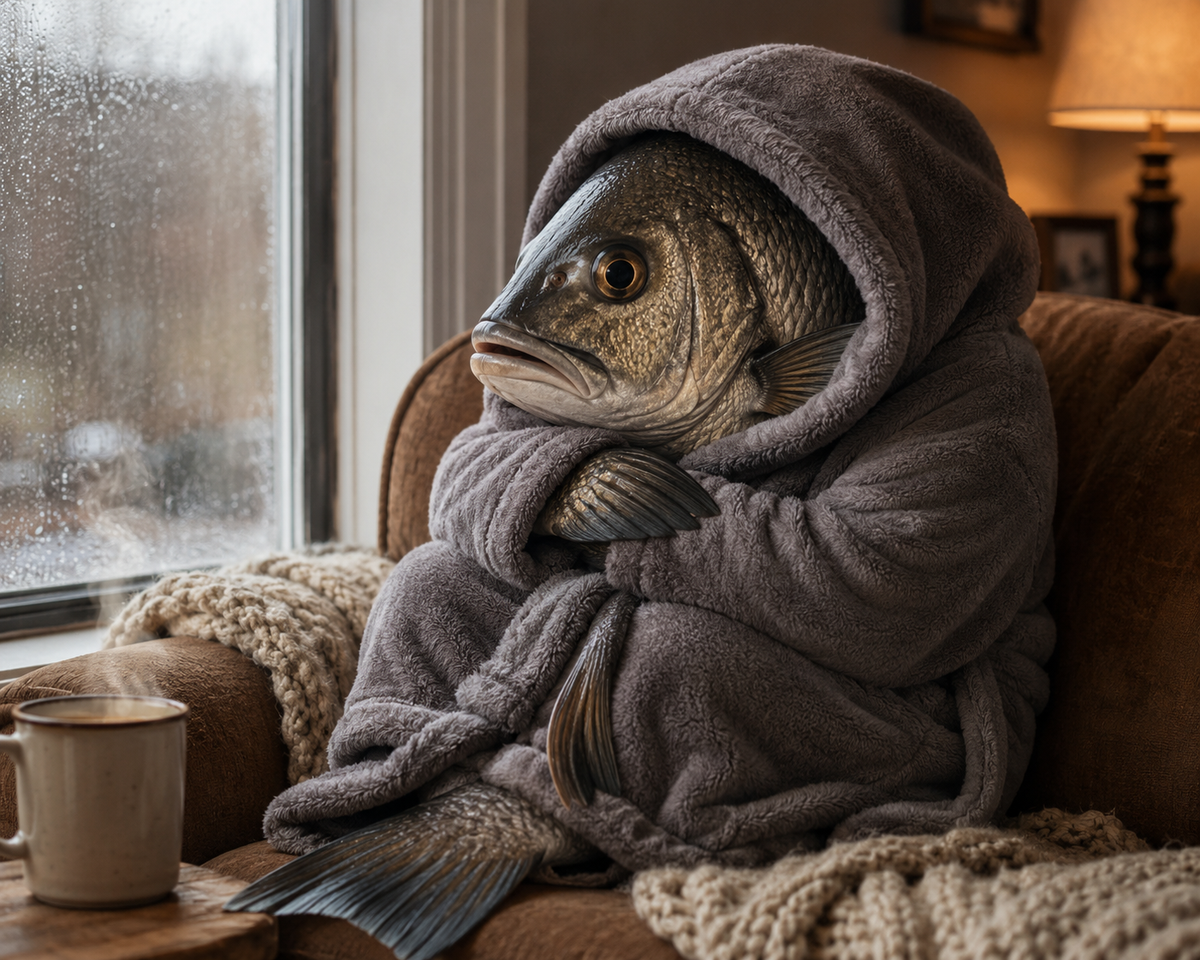
One thing most anglers notice once winter arrives is that fish often seem harder to catch. The aggressive bites of summer start to disappear, sessions can become slower, and fish that would normally smash a lure suddenly become far more cautious.
A big part of this comes down to water temperature.
Fish are cold-blooded animals, which means their body temperature and metabolism are directly affected by the temperature of the water around them. As water temperatures drop through late Autumn and Winter, a fish’s metabolism slows down significantly. This means they generally require less food and become less willing to waste energy chasing down a meal.
Rather than actively hunting, many species become far more selective and opportunistic with the way they feed. Instead of aggressively attacking fast-moving lures, they will often sit deeper, hold tighter to structure and wait for an easy meal to come close to them.
This is why slowing down your fishing during winter can make such a huge difference. Smaller lure presentations, lighter jigheads, longer pauses and slower retrieves often produce much better results than trying to fish too aggressively.
Winter conditions can also change where fish position themselves. On very cold mornings, fish will often hold deeper where the water temperature is more stable, before moving into shallower areas later in the day once the sun has had time to warm the water slightly.
Another thing many anglers notice through winter is that fish often “mouth” lures more gently rather than fully committing to a strike. This is where natural presentation becomes even more important. The more realistic a lure looks, smells and behaves, the more likely a cautious fish is to commit.
While winter fishing can sometimes require more patience, it can also produce some incredible quality fish. Understanding how colder water affects fish behaviour is one of the keys to staying consistent during the cooler months.